

How To Become A Yacht Photographer And How To Handle Gear At Sea

Many crew members go into the industry with the goal of becoming a photographer but most actually discover that passion when they are out at sea. That’s probably because the super yacht industry promises the opportunity to visit hidden pockets, beautiful landscapes and awe-inspiring sightings such as marine life, sunsets and even storms.
Many yachts have the basic camera gear for capturing those special moments, but when you enter the ranks of the mega yachts – they might have everything from the most expensive underwater cameras, drones, gimbals and batteries. Besides being able to work the gear in the most efficient and reliable way possible, you would also need to know how to maintain them properly when out at sea.
Camera lenses, screws and hinges can easily rust and damage and it is vital to maintain and store them properly.
What is the basic camera gear I need to know when entering the industry?
An underwater camera. Guests love being able to enjoy their underwater experience without the extra burden of trying to capture every moment. Being able to record their underwater adventure is highly valued on all yachts. Most cameras have an underwater setting, which is easy to turn on – this simply means that the camera will bring through the magentas and reds underwater. If you have a GoPro, you can also opt for using a lens attachment that ensures you get the correct colour grading underwater.

A Red filter is the most commonly used. This filter is optimised for use in blue water, while a magenta filter is optimised for use in green water.
Take your fish eye lens or switch your camera to a wide setting to ensure you are able to capture as much as possible. You can always edit it afterwards, but out of experience – we’ve realised the widest setting offers the most exposure. When shooting specifically for macro (smaller marine life), you would want to set your camera to capture in Linear, but the challenge comes in when trying to capture both in one dive.
If your underwater housing allows you to touch the screen and switch between the two, then great! Otherwise, we’ve noticed sticking to the wide angle/fish eye lens and just moving really, really close to capture smaller critters – really works.
How to take care of camera equipment at sea
You will be working with very expensive gear, so it is vital to know and understand how to take care of lenses, cameras and attachments. After every use, we recommend you decal the equipment, meaning sitting down in an airconditioned room, taking the gear apart, cleaning it and storing it immediately. The humidity, salt water and sand can really wreak havoc on your gear – here is how to take care of your camera equipment when out at sea:

- When working with underwater cameras, we recommend sitting in an airconditioned room as the built-up fog will take even longer to dissolve if not.
- Attachment, gimbals, selfie sticks etc. all have hinges that need to be unscrewed to ensure you wipe off any hidden pieces of salt and sand that might cause rust.
- Take an earbud and wipe every screw, hook and cranny where possible.
- Use a fibre cloth and simple cleaning agent to clean lenses after you have removed them from their casing and camera and store them when fully dried.
- Place equipment in their sponge compartments and start charging batteries and downloading all footage for the day.
Simple Tips and tricks to know when handling camera gear out at sea
These might sound extremely dumb to most, but believe us – the basics are normally the things most crew forget which leads to cameras falling into water or bashing into metal fixtures on the boat. It is very important to NOT RUN when you have a camera in your hand – stay calm and in control of your gear at all times.
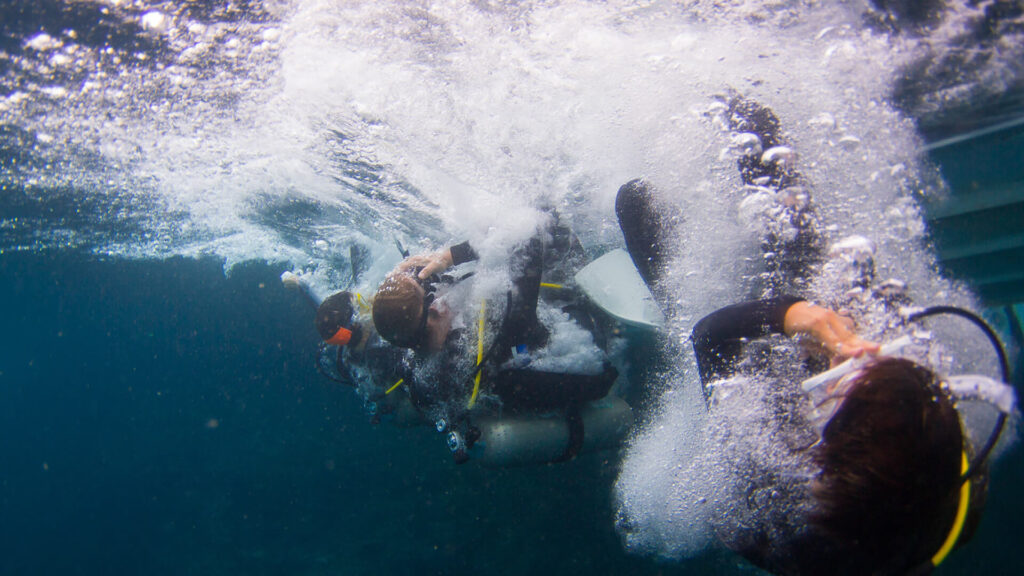
When handling cameras such as your Nikons or Canons, ensure the strap is over one shoulder whilst holding the camera in the opposite hand. This ensures the camera will not be dangling on your side, swinging and bashing against things that might damage it. When working with GoPros, we suggest you keep it in its underwater casing just in case it falls into the water. Ensure your underwater casing is on before you get onto the dive tender and do not attempt to gear up your camera whilst on the go – this can lead to the camera falling off the boat and being lost forever.
And here is our best advice – always ensure you have at least two sets of extra batteries at hand!
How to become a crew photographer
Having the experience and knowledge on how to handle the various types of gear will help you to advance into this position. It will also be beneficial to take a photography course to ensure you understand things like exposure, framing and shutterspeeds – which form the basics of photography. Adventure photography (which forms the biggest part of a life onboard as it can be fast paced) needs a special type of eye and experience, so practice practice practice and don’t miss those special moments, because we all know – a Whale Shark waits for no one!

Another vital course to consider it Drone Flying. It is growing exponentially within the industry and since it’s a very pricey piece of equipment, knowing how to pilot and care for a drone will be essential skills when trying your hand at Yacht Photographer.
Editing

Familiarise yourself with the basics of photo and video editing.
You get a lot of free programmes that can assist you and we suggest looking for the top 5 photo and video apps on your App Store to test a few out before investing in a paid version. We prefer mobile because it ensures we stay on the move.